


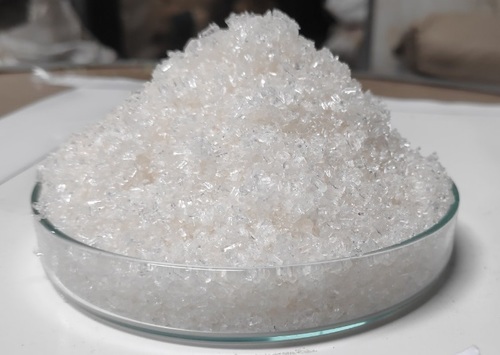
Magnesium Sulphate
1000 INR/Kilograms
Product Details:
- Melting Point 1124C (Anhydrous)
- Boiling point Decomposes before boiling
- HS Code 28332100
- Storage Store in a cool, dry place, keep container tightly closed
- Molecular Weight 120.37 g/mol (MgSO4), 246.48 g/mol (MgSO47H2O)
- Flash Point Not applicable (non-combustible)
- Water Insoluble <0.01%
- Click to View more
X
Magnesium Sulphate Price And Quantity
- 20000 Kilograms
- 1000 INR/Kilograms
Magnesium Sulphate Product Specifications
- <0.01%
- Not applicable (non-combustible)
- 120.37 g/mol (MgSO4), 246.48 g/mol (MgSO47H2O)
- Store in a cool, dry place, keep container tightly closed
- 28332100
- Decomposes before boiling
- 1124C (Anhydrous)
- 5.5 7.0 (5% solution)
- Very soluble in water (71 g/100 mL at 20C)
- Non-toxic under recommended use
- Odorless
- White crystalline powder
- MgSO4 or MgSO47H2O
- India
- Agriculture, Pharmaceuticals, Food Additive, Industrial
Magnesium Sulphate Trade Information
- 10000 Kilograms Per Week
- 1 Week
Product Description
Magnesium sulfate, also known as Epsom salt, is a chemical compound composed of magnesium, sulfur, and oxygen, with the chemical formula MgSO4. It is often encountered as the heptahydrate sulfate mineral epsomite (MgSO4 7H2O), commonly known as Epsom salt.
Magnesium Sulphate Properties:
1. Physical State: Magnesium sulfate can exist in various physical states depending on conditions such as temperature and pressure. At room temperature and pressure, it typically exists as a white, crystalline solid. It's also commonly encountered in its heptahydrate form (MgSO4 7H2O), which is a colorless, odorless, crystalline solid commonly known as Epsom salt.
2. Solubility: Magnesium sulfate is highly soluble in water. This high solubility is a key characteristic, making it easy to dissolve in aqueous solutions. The solubility increases with temperature.
3. Melting and Boiling Points: The melting point of anhydrous magnesium sulfate is 1,124 degrees Celsius (2,055 degrees Fahrenheit), while the heptahydrate form melts at around 150 degrees Celsius (302 degrees Fahrenheit) with decomposition. It does not have a distinct boiling point as it decomposes before reaching its boiling point.
4. Hygroscopic: Magnesium sulfate has hygroscopic properties, meaning it readily absorbs moisture from the air. This property makes it useful as a drying agent in certain applications.
5. Acidity: Magnesium sulfate solutions are slightly acidic due to the partial hydrolysis of the sulfate ion. However, the acidity is typically not significant.
6. Reactivity: Magnesium sulfate is relatively stable under normal conditions, but it can react with strong bases to form insoluble magnesium hydroxide. It also reacts with alkali metals to form magnesium sulfides and with strong reducing agents to form hydrogen gas.
7. Medical Properties: In medicine, magnesium sulfate has properties that make it useful in various applications, including as a laxative, as a treatment for magnesium deficiency, and as a medication to prevent seizures in conditions such as eclampsia.
Magnesium Sulphate Applications:
1. Medicine:
a. Laxative: Magnesium sulfate is commonly used as a saline laxative to relieve occasional constipation. It works by drawing water into the intestines, which softens stools and promotes bowel movements.
b. Magnesium Deficiency Treatment: It is used to treat magnesium deficiency in people with poor magnesium intake or absorption.
c. Eclampsia and Pre-eclampsia Treatment: In obstetrics, magnesium sulfate is used intravenously to prevent seizures in women with pre-eclampsia or eclampsia during pregnancy.
d. Cardiovascular Medicine: In some cases, magnesium sulfate is used to treat certain arrhythmias (irregular heartbeats) and as a cardioprotective agent during heart surgery.
e. Topical Applications: Epsom salt baths are often used to soothe sore muscles, alleviate stress, and promote relaxation, although scientific evidence supporting these benefits is limited.
2. Agriculture:
Magnesium sulfate is used as a fertilizer to provide essential nutrients to plants. It supplies magnesium, an important component of chlorophyll, and sulfur, which aids in plant growth and development. It is particularly beneficial for crops that require high levels of magnesium, such as tomatoes, potatoes, and peppers.
3. Industrial Applications:
a. Textile Industry: In textile dyeing processes, magnesium sulfate is used as a mordant, helping to fix dyes to fabrics and improve colorfastness.
Paper Manufacturing: Magnesium sulfate is used in the production of paper and pulp as a bleaching agent and sizing agent.
b. Chemical Industry: It serves as a precursor in various chemical reactions and processes, including the production of magnesium compounds and pharmaceuticals.
c. Fireproofing Materials: In the construction industry, magnesium sulfate is used as a component in fireproofing materials.
d. Desiccant: Due to its hygroscopic properties, magnesium sulfate is employed as a drying agent in laboratories and industrial processes.
4. Cosmetics and Personal Care:
Magnesium sulfate is used in various cosmetic and personal care products, including bath salts, skin exfoliants, and foot soaks, where it is believed to help soften skin and improve circulation.
5. Food and Beverage:
In food and beverage processing, magnesium sulfate is sometimes used as a brewing salt in beer production and as a flavor enhancer and nutrient supplement in food products.
Magnesium Sulphate FAQ:
Q. What is magnesium sulfate?
Ans: Magnesium sulfate, chemical formula MgSO4, is a compound composed of magnesium, sulfur, and oxygen. It is commonly known as Epsom salt.
Q. What are the different forms of magnesium sulfate?
Ans: Magnesium sulfate exists in various forms, including anhydrous magnesium sulfate (MgSO4), which is a white, crystalline solid, and magnesium sulfate heptahydrate (MgSO4 7H2O), commonly known as Epsom salt, which is a hydrated form with seven water molecules per magnesium sulfate molecule.
Q. What are the primary uses of magnesium sulfate?
Ans: Magnesium sulfate has a wide range of applications, including as a saline laxative, a treatment for magnesium deficiency, a medication to prevent seizures in eclampsia and pre-eclampsia, a fertilizer in agriculture, a component in industrial processes such as textile dyeing and paper manufacturing, and in personal care products like bath salts.
Q. How is magnesium sulfate administered medically?
Ans: In medical settings, magnesium sulfate can be administered orally as a laxative, intravenously to treat magnesium deficiency or prevent seizures, or topically in the form of Epsom salt baths for relaxation and muscle relief.
Q. What are the side effects of magnesium sulfate?
Ans: Side effects of magnesium sulfate can include diarrhea, stomach cramps, nausea, and in severe cases, magnesium toxicity, which may cause symptoms such as dizziness, confusion, and irregular heartbeat.
Q. Is magnesium sulfate safe during pregnancy?
Ans: Magnesium sulfate is commonly used during pregnancy to prevent seizures in women with pre-eclampsia or eclampsia. However, it should be used under medical supervision, as excessive doses can lead to magnesium toxicity, which may harm both the mother and the fetus.
Q. Can magnesium sulfate be used in gardening?
Ans: Yes, magnesium sulfate is commonly used as a fertilizer in gardening to provide essential nutrients (magnesium and sulfur) to plants. It is particularly beneficial for crops that require high levels of magnesium, such as tomatoes, peppers, and potatoes.
Q. Can magnesium sulfate be used in cooking?
Ans: While magnesium sulfate is generally recognized as safe for certain culinary uses, it is not commonly used as a food additive. However, it may be used in brewing beer or as a nutrient supplement in certain food products.
Q. Is magnesium sulfate environmentally friendly?
Ans: Magnesium sulfate is generally considered environmentally friendly, as it is biodegradable and does not persist in the environment. However, excessive use as a fertilizer can lead to nutrient runoff and contribute to water pollution.
Versatile Applications Across Industries
Magnesium Sulphate's high solubility and extraordinary purity make it essential for agricultural use as a fertilizer, enriching soil with magnesium. In the pharmaceutical sector, it serves as a vital ingredient in saline laxative preparations and intravenous infusions. Food industries utilize it as a firming agent and mineral supplement, while various industrial processes depend on its consistency and effectiveness. The product's adaptability ensures maximum performance across these diverse fields.
Superior Quality and Packaging
Our Magnesium Sulphate is carefully manufactured and packed in HDPE bags with liners to maintain product integrity. With a fine crystalline appearance, low moisture content, and particle size that easily passes 30 mesh, it ensures optimal dispersal in solutions or blends. Stringent quality checks guarantee compliance with international standards, offering peace of mind to distributors and consumers alike.
FAQ's of Magnesium Sulphate:
Q: How should Magnesium Sulphate be stored for maximum shelf life?
A: Magnesium Sulphate should be stored in a cool, dry place with its container tightly sealed to prevent moisture ingress, ensuring its effectiveness for up to 2 years.Q: What industries commonly use Magnesium Sulphate of this purity?
A: This product is utilized across agriculture (as a soil supplement), pharmaceuticals (in formulations), food industries (as an additive), and various industrial applications due to its high solubility and purity.Q: When is Magnesium Sulphate typically applied in agriculture?
A: Magnesium Sulphate is often applied at planting or during crop growth periods when magnesium deficiency is observed, promoting healthier plant development and yield.Q: Where is this Magnesium Sulphate manufactured and supplied from?
A: Our Magnesium Sulphate is produced, exported, and supplied from India, meeting international quality standards for diverse markets.Q: What are the main benefits of using Magnesium Sulphate in soil?
A: Magnesium Sulphate improves soil magnesium levels, aiding in chlorophyll production, enhancing plant growth, and correcting magnesium deficiencies with minimal environmental impact.Q: How is the product typically used in the food and pharmaceutical sectors?
A: In the food sector, Magnesium Sulphate acts as a mineral supplement and firming agent. In pharmaceuticals, it is used for its laxative properties and in intravenous therapies under professional guidance.Q: Is Magnesium Sulphate considered safe or toxic under recommended use?
A: This product is non-toxic and safe for its intended uses in agriculture, food, and industrial sectors when handled according to safety guidelines.Tell us about your requirement

Price:
Quantity
Select Unit
- 50
- 100
- 200
- 250
- 500
- 1000+
Additional detail
Mobile number
Email

Other Products in 'Inorganic Salt' category



Contact Us

- Plot No. 905/11/5, Near Ganeshanand Chokdi, GIDC Panoli,Ankleshwar - 394116, Gujarat, India
- Phone : 08045811900
BALAJI CHEMICALS
GST : 24AATFB9509Q1ZL
GST : 24AATFB9509Q1ZL

- Mr Saurabh Ramnikbhai Vadodariya (Partner)
- Mobile : 08045811900
- Send Inquiry
 Send Inquiry
|
 Send Inquiry
 Send SMS
 Call Me Free
BALAJI CHEMICALS
All Rights Reserved.(Terms of Use)
Developed and Managed by Infocom Network Private Limited.
Developed and Managed by Infocom Network Private Limited.

